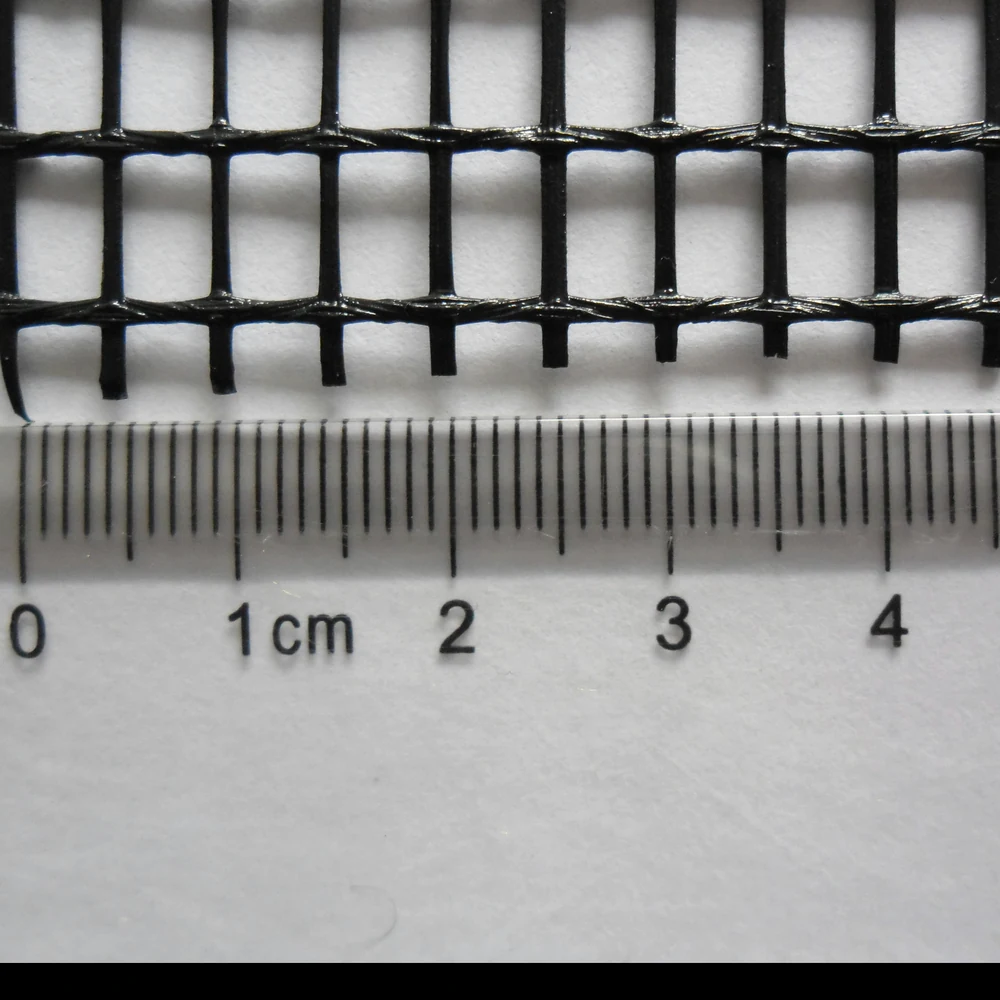
Fiberglass (fibreglass) screen: light, stable, and corrosion-resistant
PVC-coated fibreglass uses fine glass-fibre yarns woven into a mesh and protected by a polymer coating. The construction is common in residential window and door screening because it remains light, holds a regular weave, and avoids a rusting metal core.
- Lightweight handling and straightforward storage in rolls.
- Good dimensional stability in fixed and retractable frames.
- Corrosion resistance in normal humid use.
- Broad color direction, including black, grey, white, and project colors.
The limitation is mechanical resistance. Fibreglass is a screening material, not an automatic security barrier. If the requirement includes impact, forced entry, animal resistance, or industrial abrasion, those requirements need a different product discussion.
Aluminum (aluminium) screen: mechanical resistance and a different handling profile
Aluminium screening uses woven metal wire. It can offer greater mechanical resistance and a crisp metallic appearance, but the added weight changes the cutting, frame, tension, and fixing requirements.
- Higher resistance to light mechanical contact and abrasion.
- Metal appearance and a different visual texture.
- More demanding edge and frame handling.
- Corrosion and finish must match the environment.
“Aluminium” does not automatically mean a security screen. For a true security or impact function, the complete tested assembly matters, including the frame, anchors, locking, and installation.
Side-by-side comparison
The frame determines whether the comparison is meaningful
A light mesh in an inadequate frame can fail before the mesh does. A strong metal mesh can distort a frame that was designed for fibreglass. Review the screen as an assembly:
- Frame profile and internal channel.
- Spline or retaining method.
- Corner strength and fixing to the opening.
- Operation method for retractable systems.
- Cleaning and repair path.
- Exposure to wind, salt, chemicals, and impact.
Maintenance and color
Dust and pollen change the perceived color of a fine mesh. Use a cleaning method compatible with the coating and frame, and avoid aggressive scrubbing. Confirm any chemical cleaner with the material supplier.
For appearance-critical projects, place the sample against the actual window or door. The mesh color is experienced against the interior, sky, foliage, and frame - not against a white sample card.
How to run a useful sample comparison
Ask for both materials in the intended mesh count and color. Confirm whether the supplier can provide the chosen frame, retaining method, and finished dimensions. Check cutting behavior, edge stability, hand feel, and how each sample looks from both sides.
RFQ SUMMARY
Compare the complete assembly
Mesh + color + frame + tension + fixing + cleaning + environment. A material sample by itself cannot prove that the finished screen suits the opening.
Frequently asked questions
Is aluminium screen stronger than fibreglass?
Aluminium wire has higher mechanical resistance, but the finished screen is a system. Frame strength, attachment, mesh tension, and impact expectations determine whether a metal screen meets the actual requirement.
Does fibreglass insect screen rust?
PVC-coated fibreglass does not use a corrodible metal core and is commonly selected for humid residential use. The coating, cleaning chemicals, coastal exposure, and frame hardware still need consideration.
Can I use the same frame for either material?
Not automatically. Metal screen is heavier and needs compatible cutting, retention, and tension. A frame designed for a light polymer mesh may not be suitable without review.