1. Start with the material system
Insect screens are frequently described by a single word: mesh. In practice, a useful specification separates the substrate, coating, weave, color, and finishing.
PVC-coated fibreglass
This is a practical choice for window and door screens because it combines dimensional stability, light weight, and corrosion resistance in normal residential use. It handles well in fixed and retractable systems when the weave and coating are matched to the frame.
PVC and polyester mesh
Flexible polymer mesh supports a range of colors and constructions. It is useful where the screen will be cut, sewn, framed, or packaged as part of a finished system. Confirm how edges behave and whether the selected construction suits the intended tension.
Metal mesh
Metal constructions can address security, impact, or architectural objectives, but they add weight and require compatible tools, frames, and handling. They should not be treated as a simple swap for a polymer screen.
2. Balance insect exclusion, visibility, and airflow
A finer weave can restrict smaller insects, but it also changes how the opening looks and how air moves through it. The correct answer is application-led.
A screen can have the right aperture but the wrong hand feel or edge behavior for the mechanism. Material and mechanism need to be reviewed together.
3. Choose color against the real context
Black and dark grey are often selected because they reduce the visual presence of the mesh against darker interiors or shaded windows. White can integrate with bright frames but may become more visible against a dark background.
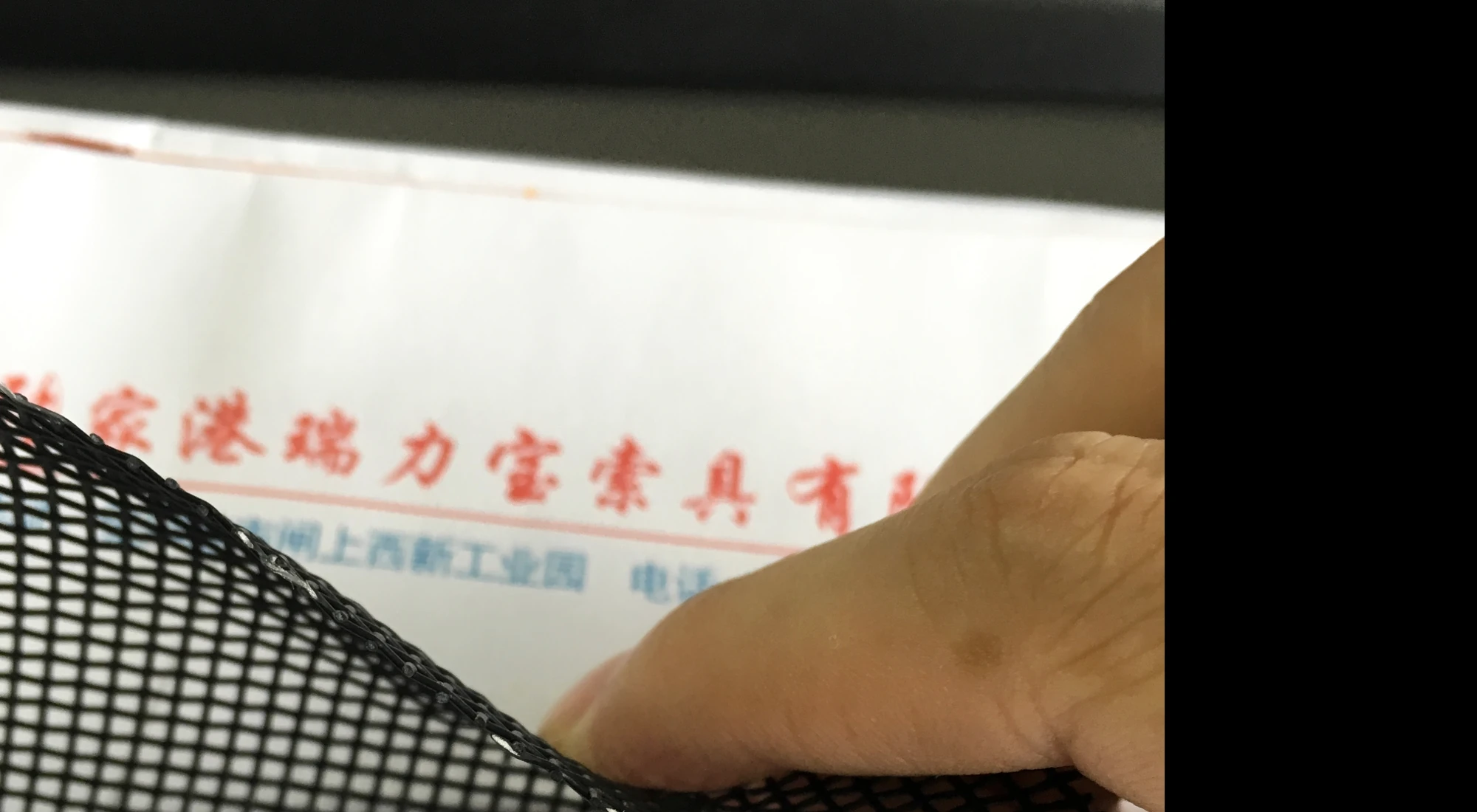
Do not approve a fine mesh from a screen image alone. Color shifts with camera white balance, the viewing device, the light behind the sample, and the material beneath it.
4. Define the finished dimension, then the material dimension
For a factory quotation, provide the clear opening, the frame or mounting strategy, and the desired finished screen size. Include the allowance for edge fixing, hemming, tension, or insertion into the frame.
- Finished width and height
- Roll width and direction of use
- Frame profile or a section drawing
- Cut, hem, eyelet, or roll-format requirement
- Packaging and labeling expectations
5. Approve a physical sample in the intended context
Place the sample against the actual glass, wall, or frame; view it from inside and outside; and check it in daylight. Confirm the approved sample reference in writing so that production can compare against the same material state.
RFQ CHECKLIST
Send these seven details
Opening size · frame type · target insect or reference mesh · color · roll or finished format · annual quantity · destination market.
Frequently asked questions
Is a darker insect screen easier to see through?
A dark mesh generally reduces the visual distraction of the screen against a bright exterior. The exact effect still depends on weave density, coating, window contrast, and viewing conditions.
What mesh count should I choose?
Select the mesh against the insects of concern and the required airflow or visibility. A physical sample shown in the intended frame is more reliable than choosing from a single number.
How should roll width be specified?
Start from the finished screen dimension and cutting allowance, then confirm the available roll width and grain or weave direction with the supplier.
Why does color appear different in a picture?
Camera white balance, display settings, lighting, and background all change the perceived color of a fine mesh. Approve a physical sample under representative lighting.
What is the best insect screen for windows?
There is no universal best screen without the opening and target requirements. PVC-coated fibreglass is a common starting point for residential windows, while polymer or metal mesh may be considered for specific handling, color, strength, or security objectives. Approve the construction in the actual frame.
Can the same mesh be used for sliding windows and hinged doors?
Not automatically. Sliding windows, hinged doors, fixed frames, and retractable systems apply different demands to tension, edge retention, flexibility, and cutting. Confirm the frame or operating hardware before selecting one mesh for multiple opening types.
Are fly screen mesh and insect screen mesh the same product?
The terms often describe similar window and door screening, but the names do not define material, mesh count, yarn diameter, coating, color, or finished format. Compare the written construction and physical sample rather than relying on the regional product name.