1. Build a seasonal inspection routine
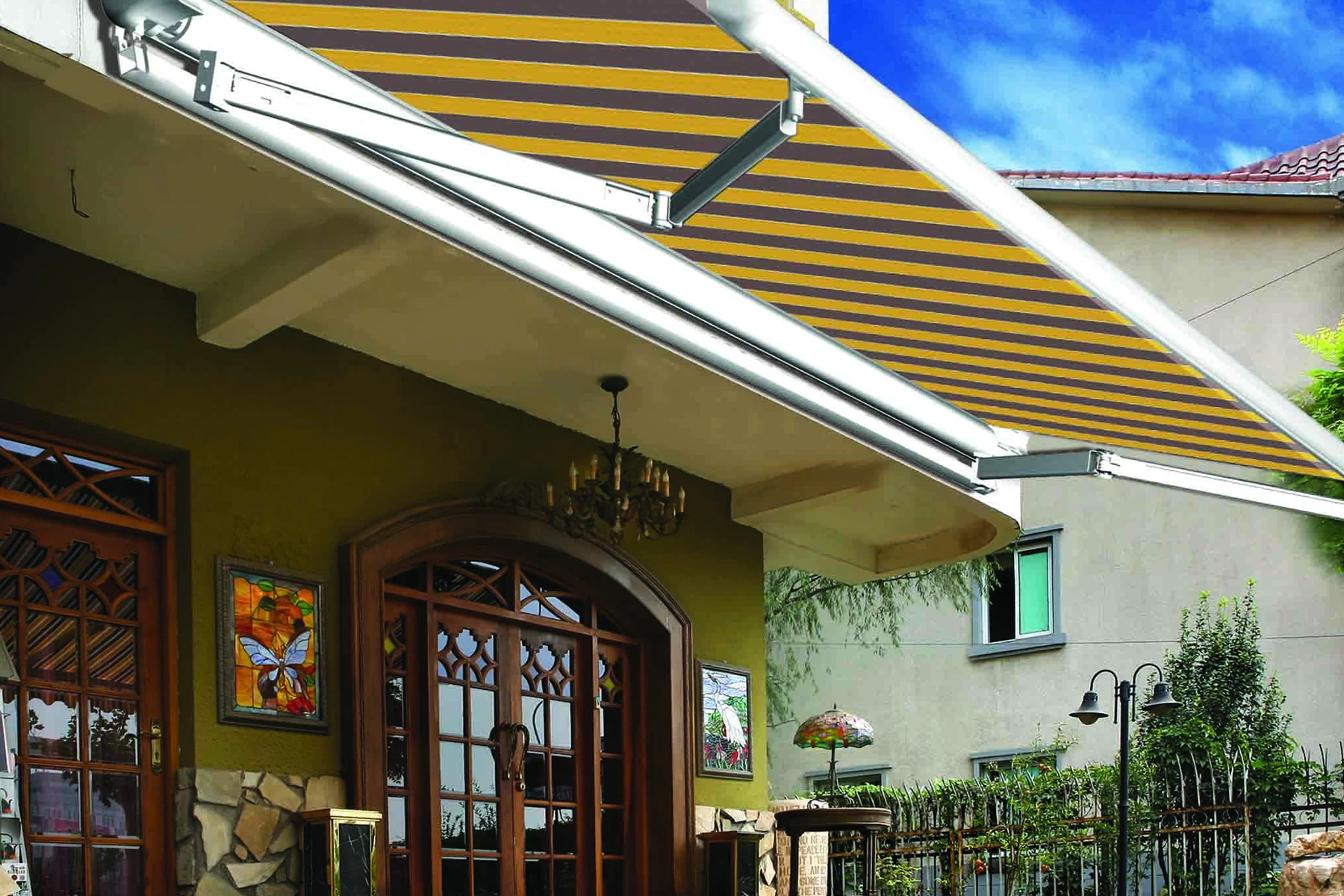
Start before the awning enters its main season. With the awning retracted, check the cassette or roller area, brackets, wall fixings, arms, fabric edges, stitching, and control points. Extend it only after the mounting and surrounding facade appear secure.
With the awning open, observe the run, fabric tension, arm movement, front profile, pitch, and clearance. Stop using it if the system becomes unusually hard to operate, the fabric runs off course, an arm or cassette looks damaged, or a fixing shows movement or deterioration.
- Mounting brackets and visible anchors
- Arm joints, pivot points, and cassette ends
- Canopy seams, hems, and edge condition
- Motor, switch, remote, and sensor operation
- Door, window, step, and walkway clearance
2. Clean the canopy using the approved fabric method
Dust, pollen, salt, and airborne dirt change the appearance of the canopy. Clean before heavy deposits become embedded, using the instructions provided for the exact fabric and awning system.
Avoid pressure washing, aggressive brushes, or strong chemicals unless the fabric supplier specifically approves them. Open and dry the awning fully after cleaning, and follow any drying requirement before retracting it into a cassette.
3. Keep a clear wind and rain operating policy
Awnings are movable shade products, not permanent storm shelters. Establish when the awning should be retracted, who is responsible for doing it, and how guests, staff, or residents receive the instruction.
A wind sensor can support that policy but does not replace it. Define the sensor response, override procedure, maintenance responsibility, and behavior after a power interruption. For a commercial or hospitality site, the policy should be part of the opening and closing routine.
OPERATING POLICY
Write down who retracts the awning and under what conditions.
Include wind, rain, snow, cleaning, maintenance, power loss, and seasonal shutdown. Keep the instruction with the control point.
4. Test controls and plan service access
Manual awnings need a clear operating point, free path for the crank, and safe access without leaning over obstacles. Motorized systems need a working switch or remote, a known wall switch or isolation point, and reasonable access to the receiver and motor.
If a remote loses pairing, a sensor behaves unexpectedly, or the awning stops partway through its travel, stop repeated attempts. Record the behavior and arrange inspection rather than forcing the mechanism.
5. Keep an awning service record
Record the model family, size, fabric and frame finish, control details, installation date, and any replaced parts. Include the approved fabric reference and site or opening number when multiple awnings are installed.
Future maintenance becomes faster when the exact system and component configuration are known. For hospitality or distributor programs, keep one standard record template across the installed range.
- Model and documented size
- Canopy and frame reference
- Motor, remote, switch, and sensor details
- Inspection dates and corrective actions
- Replacement-part references
KEEP SPECIFYING
Match maintenance planning to the installed awning format.
Review cassette and folding-arm systems together with the documented width and projection ranges.
Frequently asked questions
Can a retractable awning stay extended in rain?
It depends on the fabric, pitch, drainage, fixing, and operating limits of the selected system. Water-repellent fabric does not automatically make an awning suitable for permanent rain exposure; follow the manufacturer's policy.
How often should an awning be inspected?
Inspect before the main season and after unusual weather or visible damage. Commercial awnings may need a more frequent documented routine depending on use and exposure.
Can I pressure wash an awning canopy?
Do not assume pressure washing is suitable. Cleaning method depends on the fabric, coating, seams, and mounting. Use the exact instructions or obtain guidance for the installed fabric.
Does a wind sensor make the awning safe in a storm?
No. A sensor can support automatic retraction, but it cannot turn a retractable awning into a permanent storm shelter or guarantee safe behavior during every weather event.
Can damaged awning fabric or parts be replaced?
Replacement depends on the model, parts availability, canopy reference, and installation. Record the system details and contact the supplier with photos, dimensions, and the original specification.