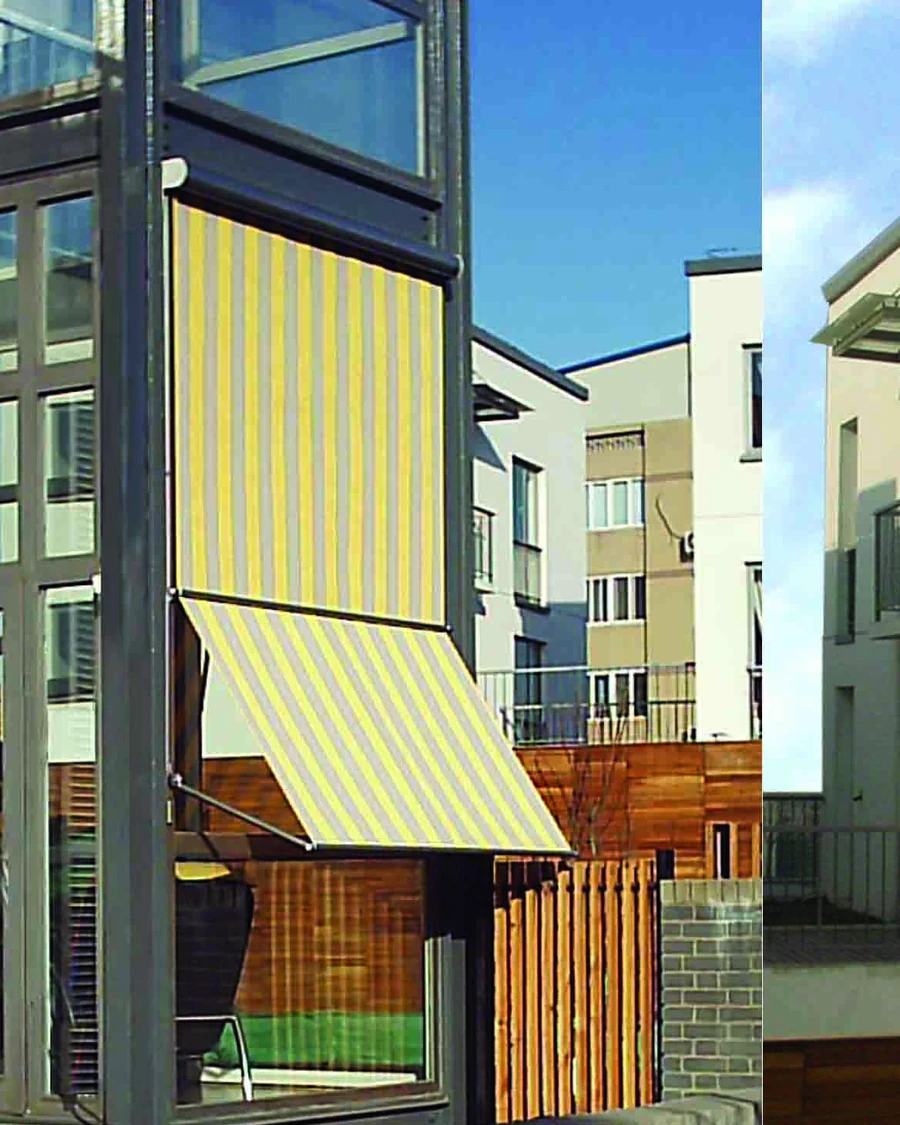
1. Capture the opening, then add dimensions
A straight-on photo shows the type of opening. A closer photo shows the frame, sill, track, sash, wall finish, and fixing surface. Add a simple dimensioned sketch even when the photo is clear.
- Overall clear opening width and height.
- Daylight dimension versus frame dimension.
- Wall, ceiling, lintel, or fascia fixing surface.
- Door or window sash movement.
- Anything within the product's operating envelope.
2. Screening brief for windows and doors
State whether the screen will be fixed, sliding, hinged, roller, or integrated into a new frame. Include the insect concern if known and any reference mesh. If the system is retractable, describe the track and how the user operates it.
3. Awning brief for terraces and windows
Mark the wall or ceiling fixing plane and show the required projection. Confirm headroom and door clearance. If the awning is to be motorised, indicate the available power route and a practical service position.
- Overall opening width and required shade width.
- Required projection during the main hours of use.
- Mounting height and available fascia or ceiling depth.
- Wall construction and bracket fixing locations.
- Manual, motor, remote, or sensor preference.
- Canopy color, frame finish, and brand reference.
4. Make the commercial requirements explicit
Technical fit and commercial fit need to be reviewed together. State annual or initial quantity, target market, delivery timing, packaging requirements, and whether the product will be installed directly or sold through another channel.
If a target price exists, include it with the assumption behind it: quantity, finish, operation, and packaging. A price without those variables cannot be compared fairly.
5. Use a quote-ready checklist
COPY INTO YOUR NEXT EMAIL
Project brief checklist
Product: insect screen / folding-arm awning / cassette awning / window awning
Application: room, building type, country
Dimensions: width / projection or height / quantity
Fixing: wall / ceiling / frame / substrate details
Operation: fixed / manual / electric / remote / sensor
Appearance: material, color, frame finish, reference image
Environment: wind, rain, salt, insect, cleaning, use pattern
Commercial: quantity, packaging, target timing, destination
Attach a site photo, elevation, or sketch. The goal is not a perfect drawing at the first contact - it is enough information to identify the correct questions.
Frequently asked questions
What measurements are needed for an insect screen quote?
Provide the clear opening width and height, the intended frame or fixing method, and the finished screen position. Include a photo or section detail where the frame, sill, sash, or track may affect fit.
What measurements are needed for an awning quote?
Provide the required width, projection, mounting height, fixing surface, and a dimensioned elevation or clear site photo. Also state the operation preference and whether the awning must clear doors, windows, or other facade elements.
Can one drawing cover multiple openings?
Yes when the dimensions and conditions are identical. Clearly note the quantity and any differences in hand, projection, mounting, or nearby obstructions.