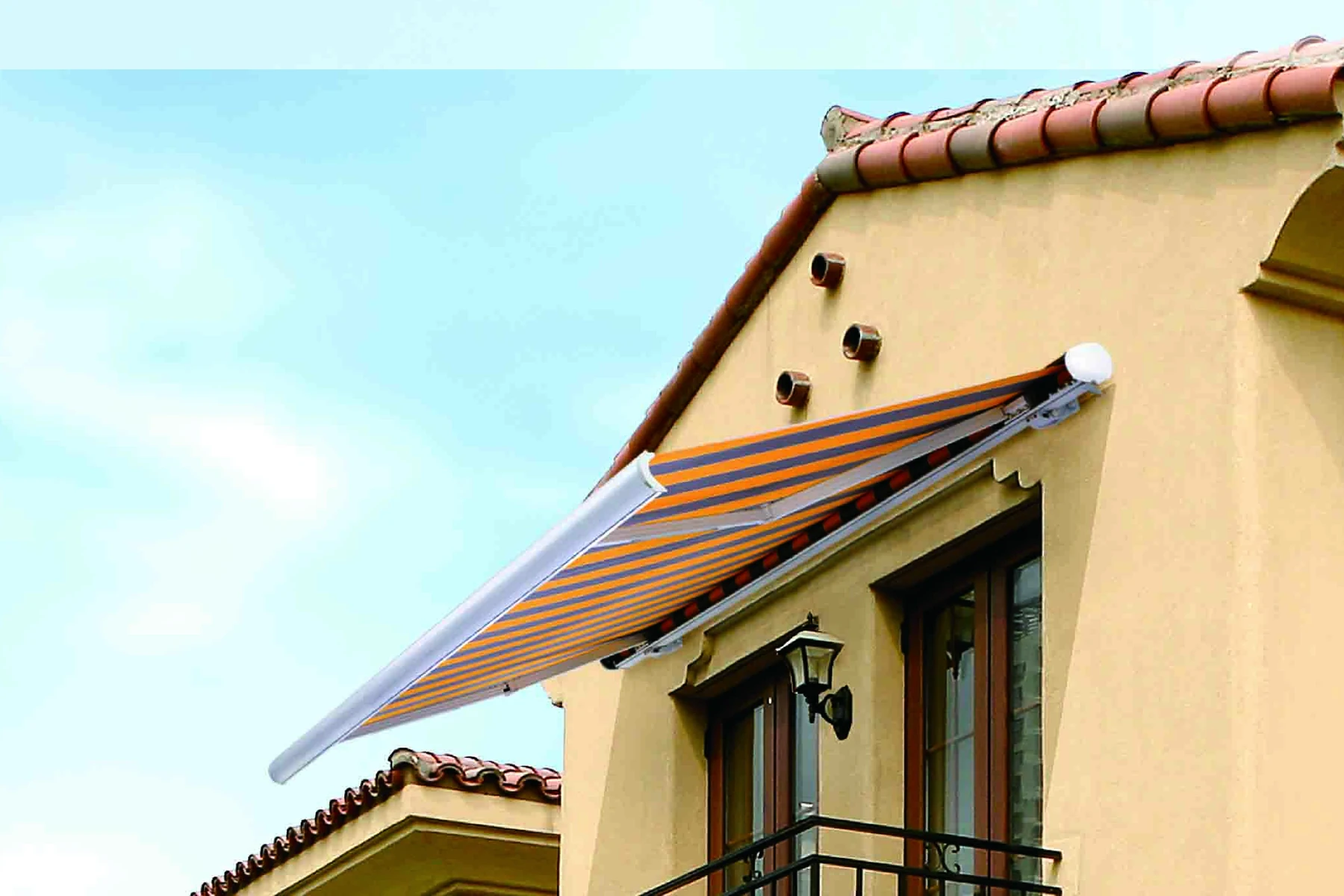
1. What buyers expect from acrylic awning fabric
Solution-dyed acrylic is commonly selected for outdoor shade because color is introduced into the fiber rather than applied only to the surface. This can support strong color depth and is often used in striped or woven canopy designs.
The practical advantage depends on the exact fabric. Weight, weave, water repellency, stain treatment, colorfastness testing, and cleaning instructions vary by supplier. Specify those properties from current technical data instead of relying on the word acrylic alone.
- Strong color and pattern potential for brand-led canopies
- Woven textile appearance and hand feel
- Project-specific water and stain treatments
- Cleaning and drying procedure must follow the fabric supplier
2. What buyers expect from polyester awning fabric
Polyester canopy fabric is often selected where a defined commercial range, coating system, or cost target matters. The base fabric may be coated or treated to support outdoor use, and the finished performance depends on the full construction.
Compare color method, coating adhesion, flexibility at the hem, seam behavior, and the expected stowage condition. A polyester fabric that works on one awning model may not be the preferred choice for a different cassette size or high-exposure installation.
3. Compare the fabric through project criteria
The product name is less useful than a side-by-side specification. Use the same criteria for every candidate and keep the physical samples identified with the supplier, collection, color code, and date.
4. Approve color and direction in the real context
Canopy color changes with daylight, surrounding surfaces, shadows, and viewing direction. Stripes can also create alignment challenges at seams, borders, and the front profile. Approve a meaningful sample size against the building, not only a small swatch on white paper.
For hospitality and retail projects, state whether the canopy must match a brand reference, an existing awning, or a facade material. Physical approval is more reliable than a digital color value when the fabric has texture or directional stripes.
FABRIC APPROVAL
Approve the collection, color code, stripe direction, and seam layout together.
Record the approved swatch and keep it with the production specification so future repeat orders have a clear reference.
5. Include fabric details in the awning RFQ
Send the awning width and projection, model family, operation, fixing condition, expected exposure, fabric reference, color code, quantity, and destination. If the canopy must coordinate with another project element, include a photo or physical reference.
Ask which fabric choices are available for the exact model and size. Cassette clearance, roller capacity, hem construction, and packing can differ even when two fabrics look similar online.
KEEP SPECIFYING
Match fabric to the awning format.
Review cassette and folding-arm product families, then compare the documented size range.
Frequently asked questions
Is acrylic fabric always better than polyester for awnings?
No universal ranking applies. The exact fabric construction, finish, color method, model compatibility, exposure, and approved care route matter. Compare current swatches and technical data for the intended project.
Can awning fabric be printed with a company logo?
Branded or custom canopy requirements can be reviewed against the fabric, pattern method, minimum quantity, and selected awning model. Confirm the reproducible color and artwork requirements before sampling.
How should I compare awning fabric samples?
View them in daylight and shade, against the building, with the intended stripe direction. Check color, texture, opacity, hand feel, and how the sample is documented for production.
Is waterproof awning fabric suitable for permanent rain exposure?
A water-resistant or waterproof fabric does not make every retractable awning suitable for permanent rain exposure. Confirm pitch, drainage, fabric, operating policy, and the limits of the selected system.