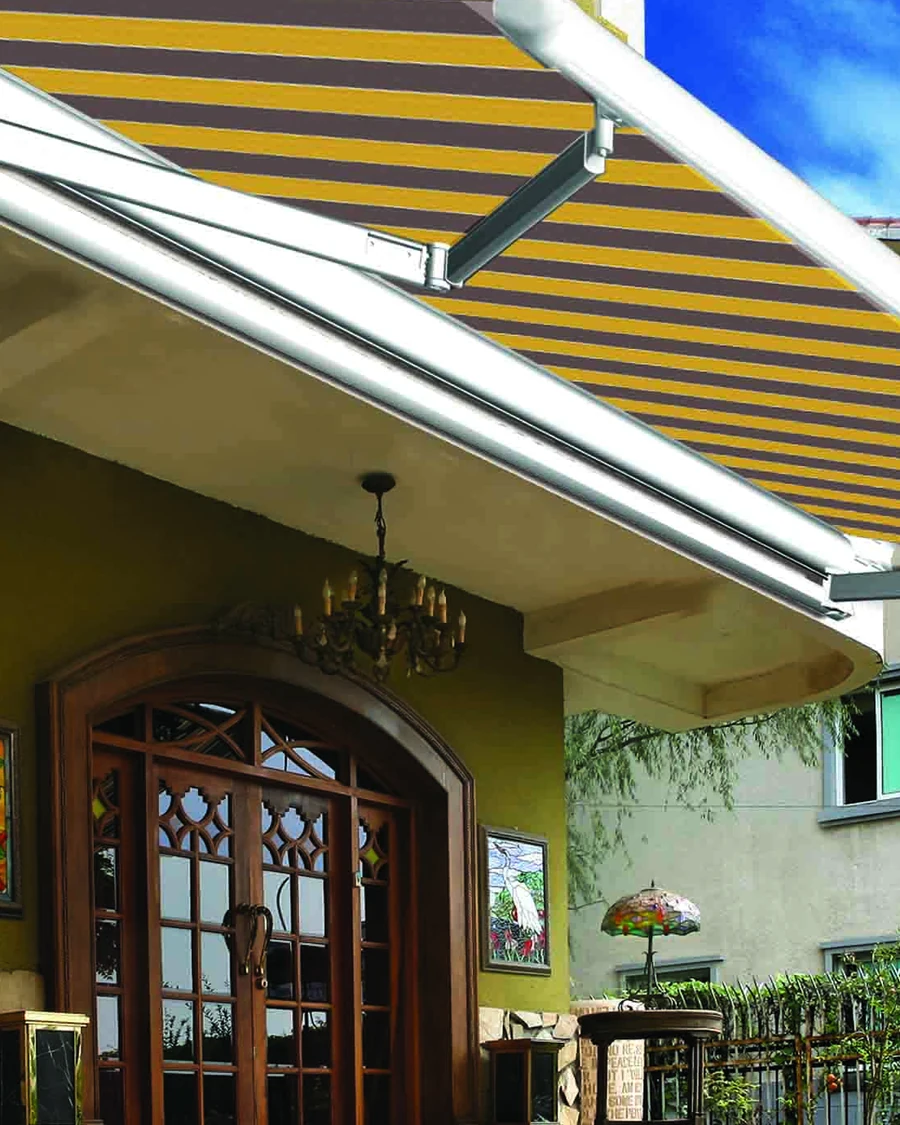
1. Separate fabric supply from installation
Trade buyers may need fabric alone, a prepared canopy, or a complete replacement awning. These are different production scopes. Fabric-only supply assumes the installer has verified the roller, arm, spring or motor, brackets, and fabric connection method.
Retractable awnings store significant spring or motor energy. Do not release, disconnect, or reinstall arms and roller assemblies without the model-specific procedure and a qualified installer. The safest initial action is to document the existing system while it remains assembled.
- Fabric roll or cut length only
- Prepared replacement canopy to an approved drawing
- Selected components or complete awning, subject to model review
- Installation left to a qualified local technician
2. Identify the awning and fabric connection
Photograph the front bar, roller tube, wall track, cassette or exposed frame, arm ends, and any existing fabric labels. Record the model family if known. For obscure or older awnings, the connection detail may be more useful than a brand name alone.
Look for retaining screws, polycord or welt profiles, hook-and-loop details, hems, and the way the canopy enters the roller and header. Do not measure only the visible fabric from the outside; the concealed allowance and connection method change the finished size.
3. Measure the old canopy as an assembly
Lay the removed canopy flat only when it can be handled safely and without changing its shape. Measure the main fabric width, the extension from the attachment edge to the front edge, and any valance drop. Mark where seams, borders, and connection strips sit.
If the old canopy cannot be removed for measurement, create a dimensioned sketch and take close photographs of each connection. State which dimensions include hems or connection allowances. Confirm the fabric direction and whether stripes or patterns must align across seams.
- Overall fabric width and extension
- Visible width between frames or cassette ends
- Valance height and front-edge detail
- Welt, polycord, hook-and-loop, hem, or fixing allowance
- Seam positions, fabric direction, and pattern alignment
4. Select the replacement fabric with the system in mind
Acrylic and polyester canopy constructions can both support outdoor awning programs, but the exact weight, weave, finish, color method, flexibility, and care requirements vary by supplier. The fabric must also suit roller capacity, stowage, seam design, and the selected awning format.
Do not copy a color name or pattern from a screen image. Approve a physical swatch against the façade and existing trim. For branded or repeat replacement programs, retain the supplier collection, color code, direction, seam plan, and approved sample with the order reference.
5. Build a replacement-canopy RFQ
Provide the model or hardware reference, system photos, old-canopy dimensions, connection details, fabric and color target, valance and seam requirements, quantity, destination, and whether the buyer needs fabric only or a prepared canopy. Confirm whether an existing physical canopy can be supplied as a reference.
For multi-unit programs, number each awning and record any differences instead of assuming nominal sizes are identical. If the existing roller, arms, spring, motor, or brackets are worn or damaged, separate those repairs from the fabric order so the installer can assess the complete system.
REPLACEMENT CHECK
A dead canopy can still be the best measurement reference.
Keep it intact until the connection profiles, seam layout, direction, and allowance have been recorded. Label each awning if more than one size or model is involved.
KEEP SPECIFYING
Move from replacement fabric to a controlled order.
Compare fabric materials and awning formats, then confirm the connection detail and documented size.
Frequently asked questions
Can I replace only the awning fabric?
Often it can be reviewed, but only after the roller, arms, spring or motor, brackets, and fabric connection method have been confirmed as serviceable. A fabric-only order should not be treated as approval of the complete awning.
What measurements are needed for replacement awning fabric?
Record overall fabric width, extension, valance drop, connection allowances, seam positions, fabric direction, and the roller and header attachment details. Measure the old canopy as an assembly rather than using one wall width.
Can replacement fabric be made without knowing the awning model?
Sometimes, provided the existing canopy and connection profiles can be documented clearly. An unknown model increases risk, so a dimensioned drawing and physical reference should be approved before production.
Can you provide installation instructions?
Installation requirements differ by awning mechanism and local conditions. Retractable arms, springs, motors, and fixings should be handled by a qualified installer following the model-specific procedure. YAJUMENG can supply product and fabric references for the review.
Can the replacement canopy match a brand color or pattern?
Custom colors and selected patterns can be reviewed against the current fabric range, production method, seam layout, quantity, and destination. Approve a physical swatch and artwork reference before production.
When should the complete awning be replaced instead?
Review a complete replacement when the roller, arms, spring or motor, cassette, brackets, or fixing structure are damaged or incompatible with the proposed fabric. The installing technician should assess the full system.