1. Choose the format from the façade condition
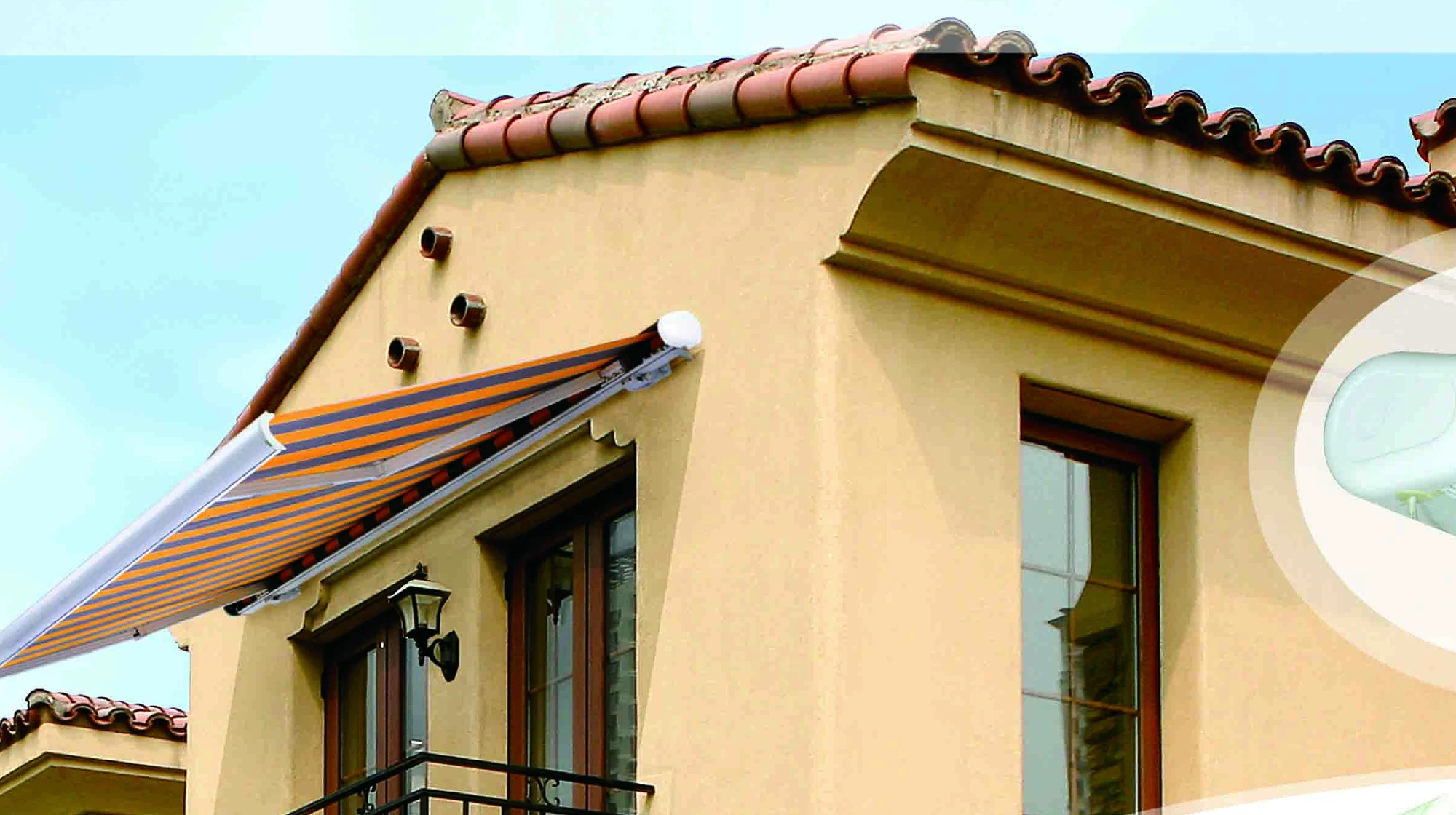
Folding-arm awnings
Folding-arm awnings are direct, adaptable, and easy to understand. They suit terraces, gardens, patios, and shopfronts where the exposed roller and arms are acceptable. Manual, electric, and remote operation are available across model families.
Cassette awnings
A cassette encloses the fabric rollout and arms. This gives a more controlled line when closed and can offer additional protection from weather and dirt. Cassette systems can be specified for large façade openings, but the enclosure needs adequate space and correct fixing.
DOCUMENTED RANGE
The supplied LCA / LCB / LCM literature documents folding-arm combinations up to about 6 m wide by 3 m projection. LCF / LCG cassette literature documents selected combinations up to 7 m wide by 4 m projection.
2. Size from use, not from the maximum
Measure the clear opening and the available mounting plane. Then determine how much horizontal shade the space actually needs at the times it is used. Too much projection can create clearance or wind-load challenges; too little can leave the seating area in sun.
- Clear width and height of the opening
- Required projection and desired shaded footprint
- Available headroom and door swing clearance
- Fixing substrate and bracket locations
- Position of lights, drainage, cables, and façade features
The pitch range is typically adjustable up to about 30 degrees on the documented systems. The final angle should shed water appropriately without compromising the installation.
3. Plan operation and power before the quotation
Manual crank operation is direct and does not require electrical work. Motorised and remote-controlled systems are more convenient for larger spans and frequent use, but the cable route, switch position, and motor accessibility need to be planned early.
Wind and sun sensors can automate retraction or extension, but a sensor is not a guarantee against storm damage. Use a clear operating policy and maintain the system.
Plan inspection, cleaning, and wind operation
4. Select fabric and protection for the exposure
Polyester and acrylic canopy options are documented across the awning series. Color influences both appearance and radiant heat; fabric openness, coating, and the stowed format affect how the awning performs in use.
For a coastal, windy, or high-exposure site, include the environment in the brief. The fixing, brackets, fabric choice, operation, and safe operating limits must be considered together.
5. Build a quote-ready awning brief
- Upload dimensioned elevation and fixing detail.
- State folding-arm or cassette preference and why.
- Specify manual, motor, remote, or sensor operation.
- Share fabric color reference and material requirement.
- List site exposure, building location, quantity, and required date.
Frequently asked questions
When is a cassette awning worth choosing?
A cassette awning is useful when the retracted system needs a cleaner appearance or when fabric and arms need more protection in the stowed position. Confirm the cassette size and installation detail against the available depth and fixing plane.
What projection should I choose?
Base the projection on the depth of shade needed, the sun angle during the hours the space is used, headroom, window height, and wind exposure. A longer projection is not automatically better.
What should be checked before awning installation?
The fixing substrate, bracket positions, cable route, power access, drainage, clearance from doors and windows, and safe operating limits should all be resolved before the final order.
Can awnings remain extended in rain?
Waterproof and water-repellent fabrics do not make every awning suitable for permanent rain exposure. Confirm the fabric, pitch, drainage, and operating policy for the selected system.