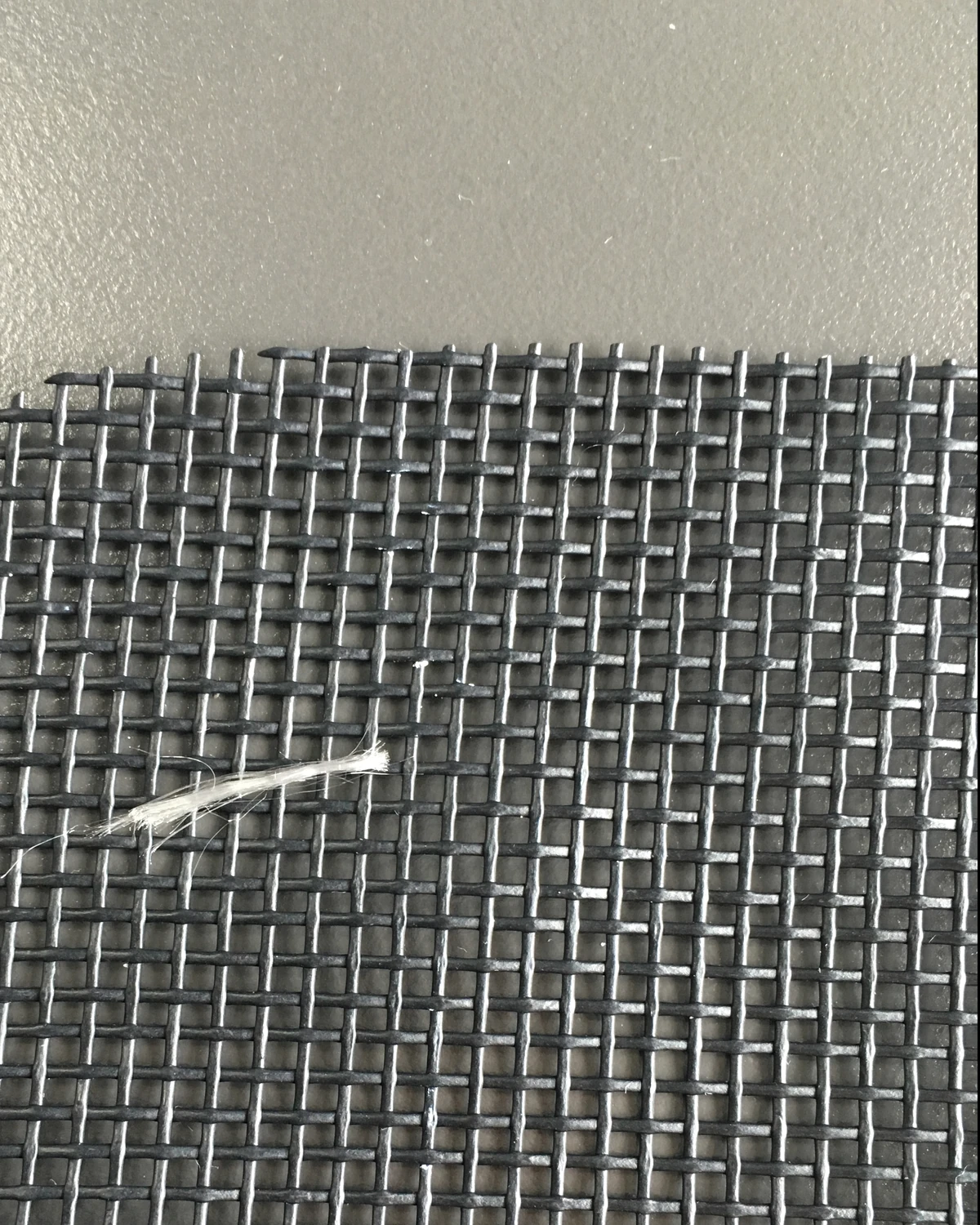
1. Define the color name and surface finish
Black, charcoal, dark grey, silver grey, and graphite are descriptive names rather than universal color standards. Two screens called black can differ in yarn color, coating gloss, weave reflection, and how much light passes through the opening.
Use a supplier color reference and a physical sample whenever color is part of the approval. Record whether the target is a matte, low-sheen, or more reflective finish. For repeat orders, keep the approved sample, construction, and color reference together.
- Write the base material and mesh construction
- Record the supplier color name and reference code
- State matte or sheen expectations
- Keep a dated physical approval sample
2. Compare visibility from both sides
Black and charcoal mesh generally reduce reflected contrast and can make the screen visually recede when looking toward a bright exterior. Grey has less dark contrast, which may suit a lighter facade or frame but can remain more noticeable against dark backgrounds.
View the sample from inside and outside, in daylight and shade, and against both a bright sky and a darker landscape. The background behind the opening often has more effect on perceived color than the name on the specification sheet.
3. Keep color separate from mesh performance
Color helps determine appearance, but insect exclusion, airflow, and strength depend primarily on the material, yarn or wire diameter, weave, mesh count, aperture, coating, and finished tension. Do not compare a fine black sample with a coarse grey sample and attribute the difference only to color.
Specify the same material and construction when the decision is about color. If the preferred color is unavailable in one construction, review a physical alternative rather than assuming that another product will look or handle the same way.
- Mesh count and aperture
- Yarn or wire diameter
- PVC coating and surface sheen
- Weave regularity and direction
- Frame tension and edge retention
4. Match the screen to the opening and facade
For residential windows with dark or bronze frames and bright exterior views, black or charcoal is a common visual starting point. Grey may suit white, silver, or pale facades where a softer transition is preferred.
For commercial and hospitality openings, compare the screen with the window profile, glazing tint, façade material, interior curtains, and exterior branding. A single screen color can also read differently on different elevations of the same building, so review the main viewing conditions before applying one specification across a project.
SAMPLE CHECK
Judge the screen against glass, not only white paper.
Install or hold the sample in the intended frame and view it from both sides. Record daylight direction, background, frame color, and the date of approval.
5. Control color in a repeat-order program
Distributors and fabricators should define a reference sample, supplier color code, construction, roll direction, and acceptable appearance standard. Packaging labels should identify the approved color so a dark grey SKU is not mixed with black at the warehouse or installation stage.
Ask how color is controlled across production lots and how a new batch is matched to the approved reference. Photographs are useful for communicating a preference, but they are not sufficient as the only color standard for a repeat supply program.
- Approved physical sample and reference code
- Material, weave, and coating construction
- Exterior and interior viewing references
- Packaging and SKU identification
- Repeat-order color-check procedure
KEEP SPECIFYING
Confirm the construction behind the color.
Compare the mesh material and sizing rules before approving a production reference.
Frequently asked questions
Is black screen mesh better than grey for visibility?
Black or charcoal mesh often appears less visually distracting against a bright exterior because the dark strands reflect less light toward the viewer. The result still depends on construction, coating sheen, background, frame color, and viewing direction.
Are black and charcoal insect screens the same color?
Not necessarily. Charcoal is usually a softer, slightly lighter dark tone, but supplier naming varies. Approve the physical mesh and record its exact color reference rather than relying on the name.
Does insect screen color change airflow?
Color alone does not define airflow. Airflow depends mainly on the open area created by the weave, strand diameter, mesh count, and tension. Compare samples with the same construction when evaluating color.
Will a black screen make the room darker?
A dark screen can slightly affect perceived brightness, but the actual effect depends on open area, yarn thickness, lighting, and the window assembly. It should not be treated as a substitute for a solar-control product.
Which screen color suits white window frames?
Grey can provide a softer transition with light frames, while black often creates stronger contrast and may improve outward visual clarity. The facade and glass color should be judged with a physical sample.
Can YAJUMENG supply custom grey or black mesh colors?
Black and grey programs can be reviewed against the selected construction, roll or finished format, quantity, and destination. Custom color availability is confirmed with a physical sample and quotation.