Acrylic canopy
Solution-dyed acrylic is commonly selected for outdoor shade and can support strong woven color and pattern options. Confirm weight, finish, cleaning, and compatibility for the exact awning.
AWNING CANOPY MATERIALS
Acrylic and polyester canopy options for folding-arm, cassette, window, and replacement awning programs, specified around color, model, handling, and exposure.
Discuss your project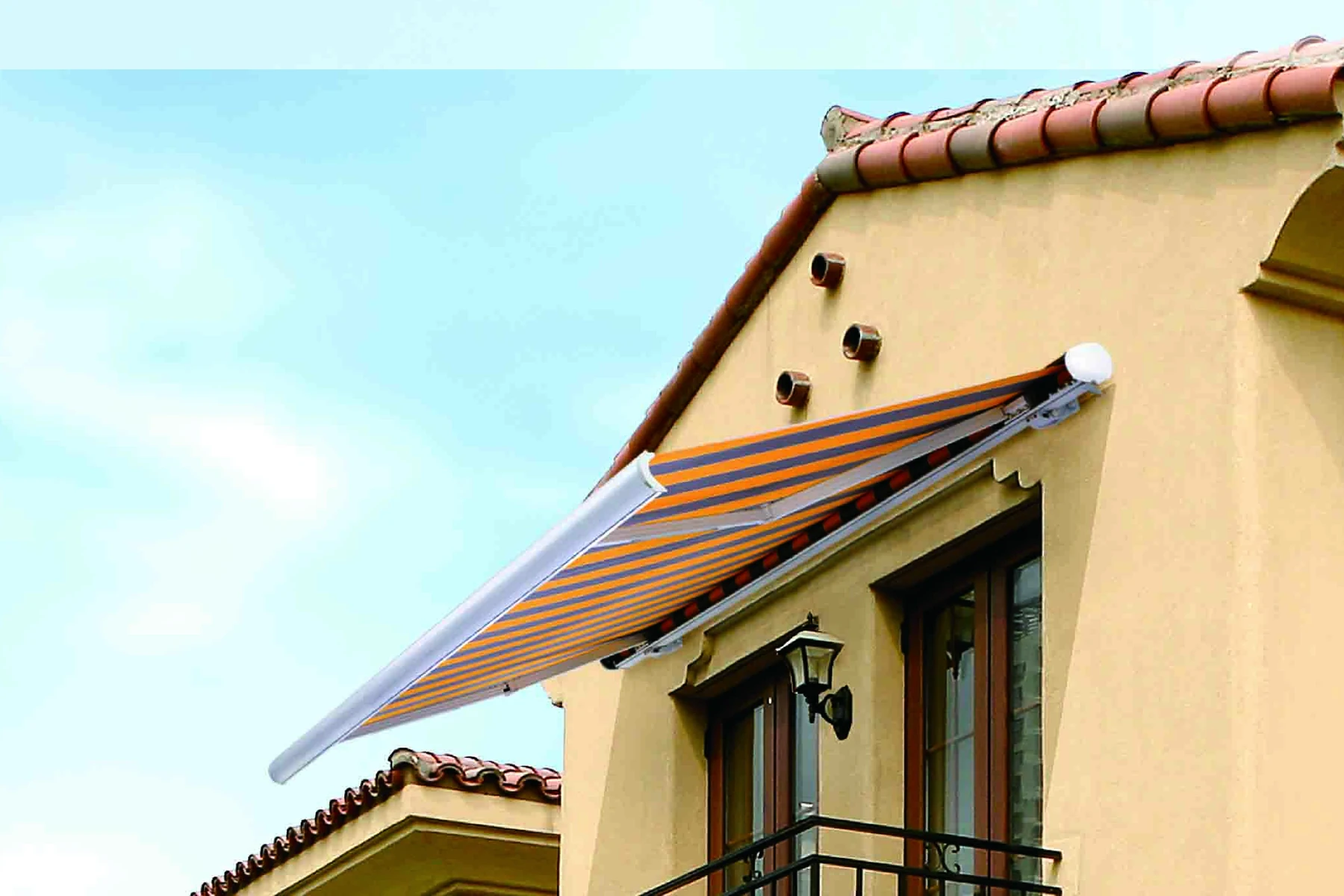
FABRIC BRIEF INPUTS
TWO MATERIAL PATHS
Use current technical data and physical samples; material names alone do not define finished performance.
Solution-dyed acrylic is commonly selected for outdoor shade and can support strong woven color and pattern options. Confirm weight, finish, cleaning, and compatibility for the exact awning.
Polyester constructions can support defined commercial ranges and coating systems. Compare color method, flexibility, seam behavior, stowage, and the intended service exposure.
Approve the collection, color code, stripe direction, seams, borders, and valance against the real facade before production.
SPECIFICATION MATRIX
The same color name can perform and look different when the construction or awning platform changes.
SAMPLE BEFORE PRODUCTION
Keep the approved swatch, collection, color code, stripe direction, awning model, and seam direction together. Review the sample in daylight and shade against the actual facade.
COMMERCIAL FORMATS
The quotation should identify whether the buyer is sourcing material, a prepared canopy, or a complete awning system.
Material rolls or defined cut formats can be reviewed for fabricators and replacement programs, subject to current range and quantity.
Dimensions, seams, welts, valance, direction, and model connection must be documented before a replacement canopy is approved.
Coordinate canopy, frame or cassette, operation, controls, packaging, and model limits as one selected system.
AWNING FABRIC FAQ
Polyester and acrylic canopy options are documented across the awning series. The exact collection, weight, finish, color range, and model compatibility are confirmed against the current production range and quotation.
No universal ranking applies. Compare the exact construction, color method, finish, flexibility, cleaning route, awning model, stowage, and exposure rather than selecting from the material name alone.
Color and selected pattern requirements can be reviewed against the current fabric range, awning model, production method, and order quantity. Approve a physical swatch and record the collection and color code.
Replacement fabric and prepared canopy requirements can be reviewed after the model or hardware, old-canopy dimensions, connection details, seam direction, and quantity are documented. Complete compatibility is confirmed per project.
View the samples in daylight and shade, against the intended facade, with the correct stripe direction. Compare color, texture, opacity, hand feel, seam behavior, care route, and the approved production reference.
Provide the awning model, width and projection, operation, fabric and color reference, framing finish, quantity, required supply format, destination, and project exposure. A photo or approved sample helps align appearance.
START WITH THE OPENING
Share the size, application, quantity, and destination. We will respond with the questions needed to move toward a reliable quotation.